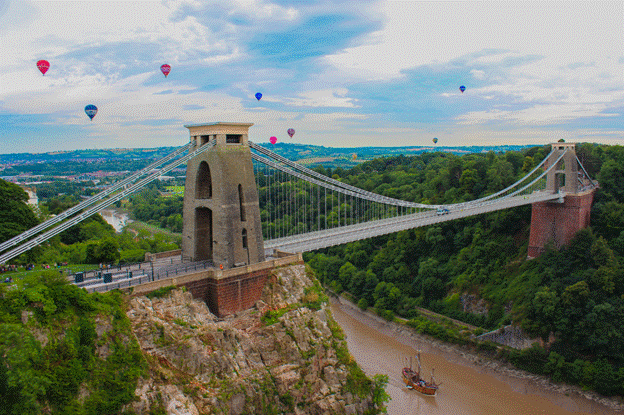
Where creativity and technology call home
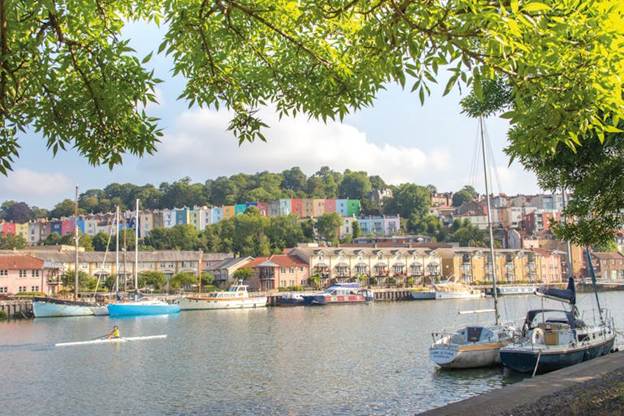
On a weekday morning on Bristol's harbourside you can pass a film production office, a bar built into an old boat, murals that were not there last summer, and a building full of people working on quantum computers.
That compression is the point. Bristol is mid-size - crossable by bike in half an hour - but an unusual number of things happen inside it at once, close enough together that a postgraduate student can be in the middle of them within a fortnight of arriving.
The room on the harbourside
Halfway along that walk is Watershed, a cinema and arts centre with an open-plan studio upstairs called the Pervasive Media Studio. It has run as a partnership between Watershed, the University of Bristol and UWE Bristol since 2011.
On any given day it holds well over a hundred artists, technologists, small creative companies and researchers, with free lunchtime talks anyone can walk into. The work ranges from immersive performance to accessibility design to projects on climate and cities.
In most places, the creative industry and the university are separate worlds. Here they share a room, and you are invited.
Why so much of this ended up here
If you grew up watching nature documentaries, you grew up watching Bristol. Planet Earth, Blue Planet, Frozen Planet — all made here. The BBC Natural History Unit has been based here since 1957, and wildlife film-makers have long come through both the Unit and the University’s biological sciences. Around a third of the world’s natural history television still comes out of this region. Aardman Animations has been here since 1976, and made Wallace and Gromit down the road. Decades of that work left thousands of small operations underneath the famous names - freelancers, two-person studios, sound designers, roughly 6,000 creative businesses across the region. The distance between having an idea and finding someone to help you build it is unusually short.
The engineering underneath
Filming something nobody has filmed before is not only a creative problem. It is one of optics, low-light sensing and moving enormous quantities of data — engineering questions the University has spent decades on.
The University leads MyWorld, a £30 million UKRI-funded programme pairing academics with the BBC, Aardman, Bristol Old Vic and Watershed.
For students, the route in is the Centre for Innovation and Entrepreneurship: eight master’s programmes across innovation, entrepreneurship, digital media and user experience design. Many are coursework-only, with no exams: live challenges set by industry partners, and a final project in which you build a venture rather than write about one. Teaching happens in studios, not lecture theatres.
Twenty minutes in the other direction
Walk the other way and the work looks completely different.
Integrated quantum photonics - the technology underneath much of modern quantum computing hardware - was invented at Bristol, and the Quantum Engineering Technology Labs have since seeded roughly a third of the UK’s quantum start-ups.
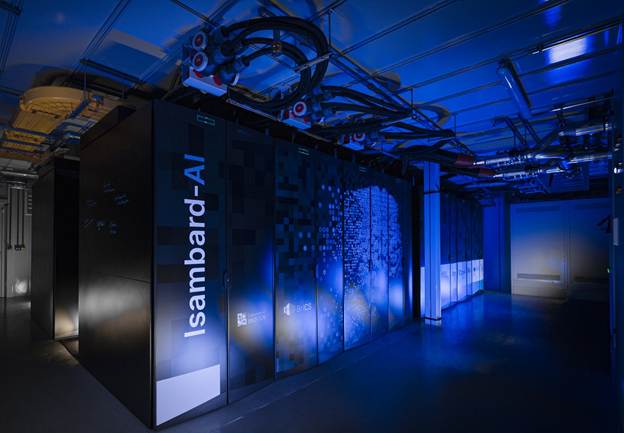
On campus sits Isambard-AI, the UK's most powerful supercomputer and eleventh in the world when ranked in late 2025. In its first year it carried about a thousand research projects. Access is limited, but the culture around it — technology pointed at real problems - runs through the city.
Research here also becomes companies - 46 of them venture-backed. PsiQuantum, founded by physicists from the University’s Centre for Quantum Photonics, was valued at $7 billion in 2025. Graphcore designs machine-learning processors. Ziylo, out of the chemistry department, was bought by Novo Nordisk for work on a better insulin. Altogether, companies founded on Bristol research have created around £8.5 billion in value since 2010 - fourth in the UK and highest outside Oxford, Cambridge and London.
A building where the two halves meet
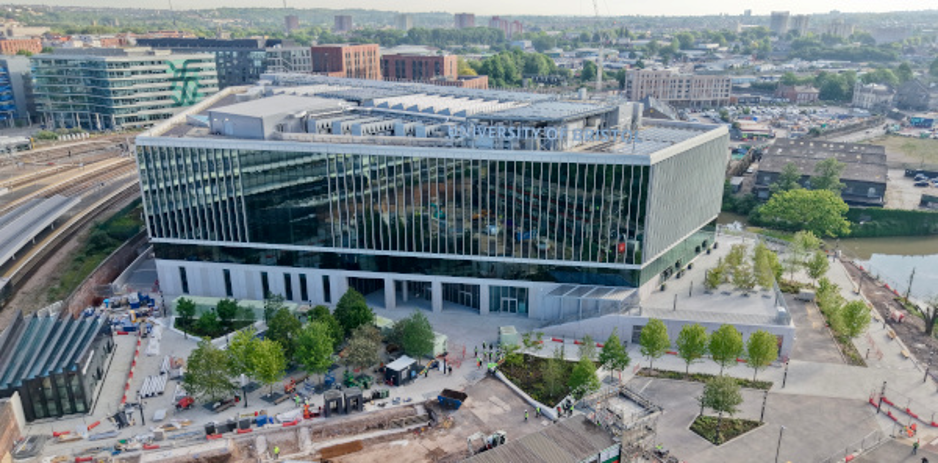
This September, the University opens a new campus beside Bristol Temple Meads station: the Temple Quarter Enterprise Campus, 38,000 square metres, to host 4,600 students.
It is more than classroom space: open-access labs for quantum and deep tech companies, a start-up incubator, and industry partners sharing corridors with teaching space.
The year around the work
None of this matters if you would not enjoy living there.
Time Out named Stokes Croft and St Paul’s the world's sixth-coolest neighbourhood in 2024, the highest-ranked in the UK. This is Banksy’s city, and every summer Upfest repaints stretches of it. It gave the world Massive Attack, Portishead and Tricky. On an August morning, hundreds of hot air balloons come up off Ashton Court at dawn, and the whole city stops to look.
Ninety minutes from London by train; an hour from the Welsh coast and the Cotswolds.
For Marshall Scholars, Bristol is a partner university with its own dedicated award, covering graduate study in any subject at master’s or doctoral level for up to two years with a possible third for doctoral work.